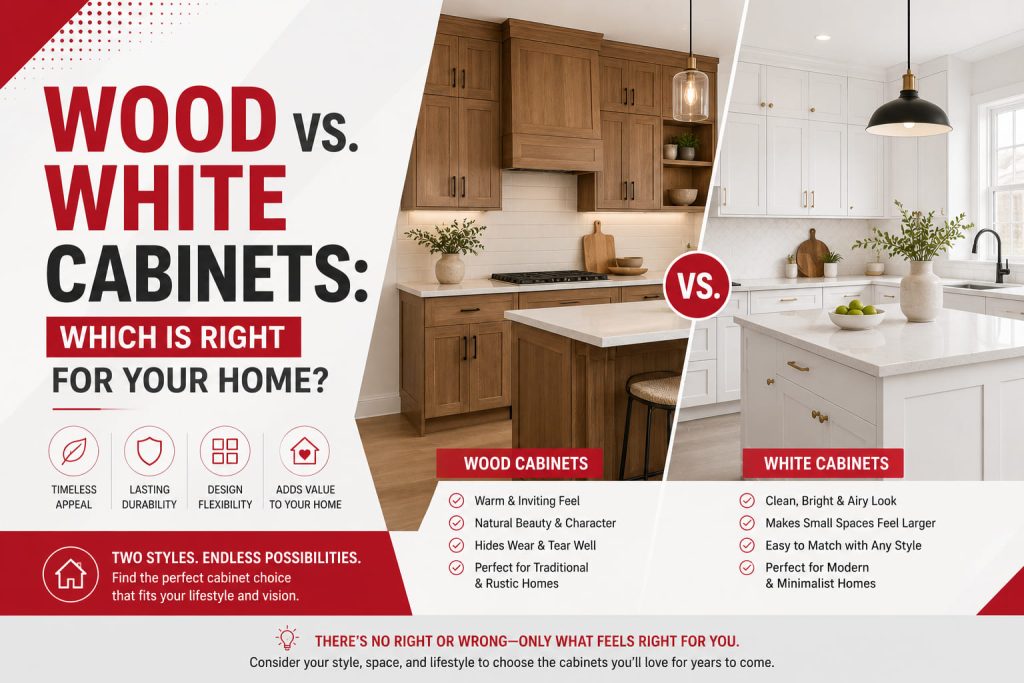
It’s one of the most common questions homeowners face when planning a kitchen update: should I go with wood cabinets or stick with white? Both are strong choices — and both have real trade-offs. The right answer depends on your kitchen layout, your lifestyle, and what you actually want to live with every day.
Here’s a straight-up comparison to help you think it through.
The Case for Wood Cabinets
They Add Natural Warmth
Wood brings something into a kitchen that paint simply can’t — texture, grain, and a sense of organic warmth. Whether it’s a light maple, a rich walnut, or a mid-tone oak, wood-tone cabinets make a kitchen feel livable rather than sterile. This is a big part of why wood overtook white as the most popular cabinet choice in 2026 for the first time in years.
If you want to see how different wood finishes actually look in a real kitchen setting, take a look through our project gallery for real installation examples.
Wood Hides Everyday Wear Better
Fingerprints, minor scuffs, and small dents are a fact of life in an active kitchen. Wood — especially in medium or darker tones — tends to absorb these imperfections without making them obvious. A painted white cabinet, on the other hand, shows every smudge and chip, often requiring touch-ups over time.
If you have young kids, a busy household, or just cook a lot, wood’s forgiving nature is worth factoring into your decision.
Wood Ages Gracefully
Good-quality wood cabinetry develops character over time. The grain may deepen slightly, and the finish settles in — but this typically reads as warmth rather than wear. With white cabinets, aging often looks like yellowing or chipping, which can make the kitchen feel tired even if the bones are still solid.
Works Well With Current Trends
Natural wood pairs beautifully with the earthy, grounded aesthetics dominating kitchen design right now — stone countertops, matte black hardware, warm lighting, and textured tile backsplashes. If you’re doing a full kitchen update, wood-tone cabinets will slot naturally into the current design direction without feeling like a trend-chase.
The Case for White Cabinets
White Makes Small Kitchens Feel Larger
This is the practical argument that’s kept white cabinets popular for decades. In a smaller or darker kitchen, white cabinets reflect light and create a sense of openness that wood — especially darker wood — doesn’t replicate as effectively. If your kitchen lacks natural light or feels cramped, white may genuinely be the smarter functional choice.
White Is Genuinely Versatile
White goes with almost everything. Swap out your countertops, change your backsplash, repaint your walls — white cabinets won’t clash with the update. That flexibility makes white a low-risk choice if you like refreshing your kitchen’s look every few years without replacing the cabinets themselves.
White Pairs Well With Bold Accents
If you want a colorful island, a statement backsplash, or bold pendant lighting, white cabinets give those elements room to breathe. Wood cabinets are strong visual elements on their own — pair them with too many other bold choices and the kitchen can start to feel busy. White acts as a neutral backdrop that lets accents do their job.
Classic and Proven
White kitchens have staying power. Trends come and go, but a well-done white kitchen with quality materials doesn’t go out of style the way more trend-specific choices might. If you’re thinking about resale value, white remains a broadly appealing choice to future buyers.
Where Wood Falls Short
Wood isn’t perfect. It can be sensitive to moisture if not properly sealed — a real concern in kitchens near the sink or dishwasher. It can also feel heavy or dark in kitchens with limited natural light. And not every wood tone pairs well with every countertop or flooring option, so coordination matters more than with white.
If you’re unsure whether a specific wood finish will work with your existing kitchen elements, book a visit and bring photos of your space. It’s much easier to evaluate in a real conversation than through a screen.
Where White Falls Short
White shows everything — every splash, every fingerprint, every grease mark. In a high-use kitchen, keeping white cabinets looking clean requires regular attention. The finish can also chip and yellow over time, particularly on cheaper painted cabinets. Quality matters a lot with white: a poorly painted cabinet looks worse with age than almost any wood option.
Can You Have Both?
Yes — and it’s one of the stronger kitchen design moves right now. Two-tone kitchens combine wood and white (or wood and a soft neutral) by using different finishes on the upper and lower cabinets, or by making the island a different material than the perimeter cabinets. You get the warmth of wood and the brightness of white without fully committing to either.
Browse our kitchen cabinet options to compare available finishes side by side.
How to Make the Call
A few questions worth asking yourself before you decide:
- How much natural light does your kitchen get? Low light favors white; well-lit kitchens can handle wood easily.
- How busy is your household? High-traffic kitchens with kids or pets generally do better with wood’s forgiving surface.
- What’s already in the space? Consider your flooring, countertop material, and wall color before committing.
- How long are you staying? If resale is a near-term priority, white is a safe choice. If this is your long-term home, pick what you’ll genuinely enjoy.
There’s no wrong answer here — both wood and white can produce a kitchen you’ll be happy with for years. The difference is in the details: quality of construction, how the finish is applied, and whether the choice fits the way your household actually uses the space.
At MNK Cabinet, we carry both wood-tone and white cabinet lines so you can compare real options rather than just pictures. Browse our full selection or get in touch if you’d like help narrowing down the right fit for your kitchen.